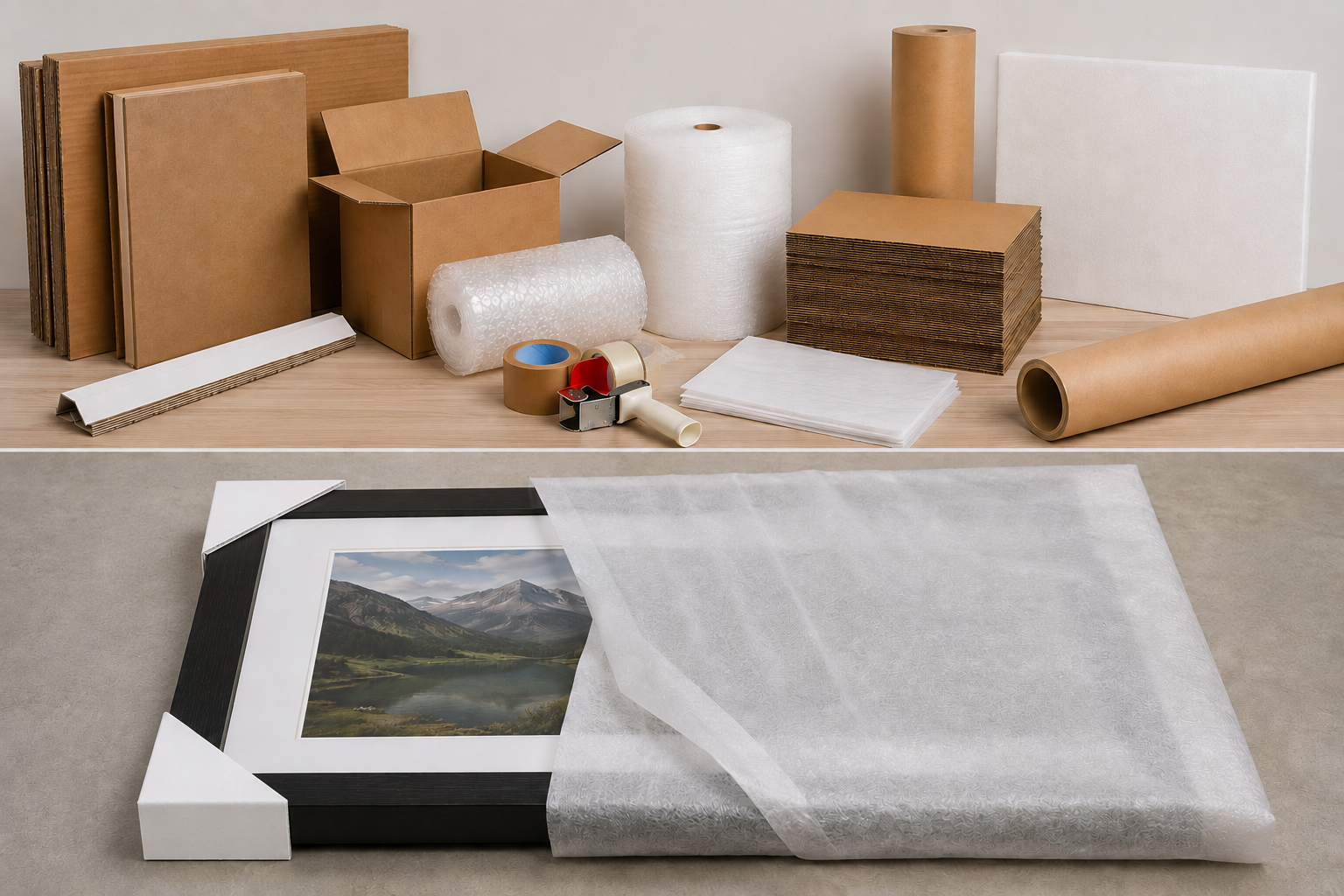
Safely Transporting, Packaging & Shipping Artwork to Our Workshop
Whether you are bringing artwork to us from across town, driving in from another region, or arranging freight from elsewhere in New Zealand, careful preparation can make a significant difference to how safely your artwork arrives.
Different types of transport require different levels of protection. A short drive to the workshop may only require careful positioning and surface protection, while freight and long-distance transport require more substantial packaging methods to reduce movement, vibration, impact, and environmental changes during transit.
This guide has been designed to help you safely prepare artwork for transport to our workshop.
Choose Your Situation
- Short Local Car Trip to Our Workshop
- Driving Artwork Long Distance
- Packaging Artwork for Freight or Courier
- Oversized & Highly Fragile Artwork
- Common Artwork Transport Mistakes
When Practically Possible, We Prefer Artwork Delivered in Person
Whenever practical, hand-delivering artwork to our workshop is often the safest option — particularly for:
- large glazed works
- oversized artworks
- fragile frames
- valuable artworks
- sentimental items
This allows us to assess the artwork immediately and reduces the risks associated with freight handling and long-distance transport.
For customers further away please read on.
Before You Begin
General Handling Recommendations
Before transporting or packaging artwork, we recommend following a few basic preparation steps to help reduce the risk of scratches, pressure marks, vibration damage, glass breakage, or environmental stress during transport.
Clean Hands & Safe Handling
- Wash hands thoroughly before handling artwork
- Cotton or nitrile gloves are recommended for delicate or unglazed works
- Avoid touching artwork surfaces directly where possible
Finger oils, dirt, and moisture can permanently mark some artwork surfaces.
Protect the Artwork Surface
Never allow the following materials to sit directly against artwork surfaces:
- Bubble wrap
- Tape
- Packing peanuts
- Newspaper
- Rough cardboard
- Plastic wrap for extended periods
Instead, use:
- Glassine paper
- Acid-free tissue paper
- Non-stick protective paper for delicate surfaces
For artworks with fresh or delicate painted surfaces, a clean non-stick protective layer may be required before additional wrapping materials are applied.
Important: Bubble Wrap Direction Matters
When using bubble wrap, the bubbles should face outward rather than directly against the artwork or frame surface.
This helps reduce:
- Pressure marks
- Surface impressions
- Texture transfer
- Abrasion during movement
This small detail is often overlooked but can make a significant difference during transport.
Framed Artwork With Glass
For framed artworks with glass:
- Place painter’s tape across the glass in an “X” pattern
- This helps reduce movement if the glass breaks during transit
- Never use excessive pressure when applying tape
If glass is already cracked or broken:
- Carefully remove loose shards where possible
- Place soft padding beneath remaining sharp edges
- Cover remaining broken sections carefully before wrapping
When transporting multiple framed artworks together, they should always be positioned either:
- Back to back (preferred), or
- Face to face
This helps reduce pressure points and significantly lowers the risk of glazing breakage and frame surface damage during transport.
Avoid stacking framed artworks with exposed glazing or decorative surfaces rubbing against one another.
Remove Loose Hardware
Before transport:
- Remove loose hanging wires if possible
- Secure hooks and hardware separately in a labelled bag
- Avoid loose metal hardware swinging against the frame during movement
Option 1 — Short Local Car Trip to Our Workshop
Suitable For
- Local customers
- Smaller artworks
- Framed pieces travelling directly to our workshop
- Transport times under approximately 1–2 hours
For shorter trips, the goal is usually to prevent:
- Sliding
- Corner damage
- Minor vibration
- Surface scratches
- Glass breakage
Step 1 — Protect the Front Surface
Unframed Artwork
Wrap using:
- Non-stick paper
- Glassine paper
- Acid-free tissue paper
Framed Artwork
Wrap using:
- A clean soft blanket
- Soft protective fabric
- Light cushioning where required
Avoid:
- Bubble wrap directly against artwork
- Newspaper touching artwork surfaces
- Loose plastic against frame finishes
Step 2 — Add Corner Protection
Protect corners using:
- Foam corner protectors
- Folded cardboard corners
- Soft padding
Corners are usually the first areas damaged during transport.
Step 3 — Wrap Carefully
If additional protection is required:
- Use bubble wrap with the bubbles facing outward
- Wrap with light tension only
- Avoid compressing ornate or delicate frames
Step 4 — Transport Upright
Artwork should travel upright like a passenger rather than flat.
Best practices include:
- Positioning between seats
- Using seatbelts where possible
- Using non-slip mats or cushions
- Preventing movement during braking or cornering
Avoid stacking heavy items against artwork.
If transporting multiple framed artworks together:
- Position them back to back wherever possible
- Face to face is the second safest option
- Avoid face-to-back positioning of framed works
Step 5 — Avoid Heat & Moisture
Do not leave artwork:
- In direct sunlight
- In hot vehicle boots/trunks
- In damp environments overnight
Extreme temperatures and moisture can:
- Warp timber
- Crack paint
- Cause condensation beneath glazing
- Damage paper artworks
Option 2 — Driving Artwork Long Distance
Suitable For
- Out-of-town customers
- Inter-city transport
- Customers travelling several hours
- Larger framed artworks
- More delicate pieces
Longer trips create additional vibration and movement, so stronger protection is recommended.
Step 1 — Surface Protection
Wrap the artwork first in:
- Glassine paper
- Acid-free tissue paper
For delicate surfaces:
- Add a rigid protective layer to the front
- Foam board or corflute works well
Step 2 — Protect the Corners & Edges
Add:
- Foam corners
- Cardboard edging
- Soft padding around ornate frame profiles
Step 3 — Add Rigid Protection
For valuable or larger works:
- Sandwich the artwork between rigid boards
- MDF, foam board, or corflute can be used
This helps reduce:
- Flexing
- Pressure damage
- Corner crush damage
Step 4 — Bubble Wrap Correctly
Wrap using heavy-duty bubble wrap:
- Bubbles facing outward
- Multiple layers if required
- Secure lightly with tape
Do not overtighten the wrapping.
Step 5 — Secure in Vehicle
The artwork should:
- Travel upright
- Be secured tightly to prevent movement
- Not sit beneath heavy luggage or boxes
We strongly recommend:
- SUVs
- Wagons
- Vans
Where possible avoid:
- Open trailers
- Roof racks
- Laying large artworks flat
If transporting multiple framed artworks:
- Back to back positioning is preferred
- Face to face positioning is also suitable
- Use soft separators between works where possible
Option 3 — Packaging Artwork for Freight or Courier
Suitable For
- Nationwide customers
- Freight delivery to our workshop
- Valuable or oversized works
- Commercial transport
Freight handling places substantially greater stress on artwork packaging, which is why stronger protective methods are recommended for long-distance shipping.
Freight transport may involve:
- Multiple loading points
- Conveyor handling
- Stacking pressure
- Vibration
- Sudden impacts
Step 1 — First Protective Layer
Wrap the artwork in:
- Glassine paper
- Acid-free tissue paper
Never allow:
- Bubble wrap
- Tape
- Packing peanuts
- Plastic wrap
to touch the artwork directly.
Step 2 — Corner Protection
Install:
- Foam corners
- Cardboard corner protectors
- Additional edge cushioning
This is particularly important for framed works.
Step 3 — Add Rigid Front & Back Protection
Sandwich the artwork between:
- MDF sheets
- Corflute
- Foam board
- Honeycomb cardboard panels
For larger works:
- Minimum 6 mm rigid board recommended
This additional rigid protection helps reduce:
- Flexing
- Corner crush damage
- Pressure damage during stacking
- Freight puncture risks
Step 4 — Bubble Wrap the Entire Package
Wrap the full package in heavy-duty bubble wrap:
- Bubbles facing outward
- Multiple layers recommended
Secure all layers carefully with strong packing tape.
Step 5 — Double Box the Artwork
We strongly recommend the “box-in-a-box” method.
Inner Box
- Artwork fits snugly
- Minimal movement
- Padding on all sides
Outer Box
- Additional cushioning zone
- Extra impact protection
Use:
- Double-wall cardboard boxes
- Strong rigid cartons
Step 6 — Fill All Voids
Artwork should not move inside the box.
Use:
- Foam sheets
- Crumpled kraft paper
- Dense foam padding
Avoid:
- Loose packing peanuts directly against artwork surfaces
Step 7 — Label Clearly
Clearly mark:
- Fragile
- This Side Up
- Handle With Care
on multiple sides of the package.
While labels should always be used, packaging should still be strong enough to protect the artwork even if the carton is handled roughly during transit.
Step 8 — Insurance & Freight Selection
For valuable works:
- Insure the shipment for full replacement value
- Photograph the artwork before shipping
- Photograph packaging stages for records
For larger or fragile works, specialist freight providers are often recommended.
Examples include:
- Mainfreight
- Pack & Send
- Specialist art transport services
Oversized & Highly Fragile Artwork
Custom Crating
For:
- Large glazing
- Museum glass
- Oversized artworks
- Valuable original artworks
- Fragile antique frames
a custom timber crate may be the safest option.
Crating significantly reduces:
- Flexing
- Compression damage
- Puncture risks
- Freight stacking damage
For especially valuable works, professional art transport services may also be worth considering.
Common Artwork Transport Mistakes
Some of the most common transport mistakes we see include:
[Read More]
- Bubble wrap directly against artwork surfaces
- Transporting artwork flat instead of upright
- Weak supermarket boxes used for freight
- Loose movement inside packaging
- Excessively tight wrapping pressure
- Artwork left in hot vehicles
- Tape applied directly to frames or glazing
- Unprotected corners and edges
- Freight cartons without rigid support boards
Many transport issues can be avoided with careful preparation before the journey begins.
What Not To Use
Avoid using:
- Newspaper directly against artwork
- Household cling wrap for long-term transport
- Weak single-wall cartons
- Loose packing peanuts against artwork surfaces
- Masking tape directly on frames
- Rope or string around frame mouldings
These materials can cause abrasion, pressure marks, moisture issues, or structural damage during transport.
Helpful Things to Include With Your Artwork
If sending artwork to us, it can also help to include:
- Your contact details
- Return address
- Instructions or notes
- Design inspiration images
- Measurements if relevant
- Any known concerns about the artwork
If possible, emailing photographs of the artwork before freight dispatch can also help us prepare for its arrival.
Frequently Asked Questions
Can I wrap artwork directly in bubble wrap?
No. Bubble wrap should not sit directly against artwork surfaces. Always use a protective barrier such as glassine or acid-free tissue paper first.
Should artwork travel flat or upright?
Artwork should generally travel upright wherever possible. This reduces pressure stress and lowers the chance of glass breakage.
Can heat damage artwork in a vehicle?
Yes. Excessive heat can warp timber, soften adhesives, crack paint, and create condensation beneath glazing.
What is glassine paper?
Glassine is a smooth, non-stick archival paper commonly used to protect delicate artwork surfaces during storage and transport.
Is freight safe for framed artwork?
Yes — provided the artwork is packaged correctly using rigid protection, cushioning, and strong external packaging.
Should I insure artwork shipments?
For valuable, sentimental, or irreplaceable works, insurance is strongly recommended when using freight or courier services.
Need Advice Before Sending Artwork?
Every artwork is different.
Some pieces may require only simple protection, while others benefit from more specialised preparation methods depending on:
- Medium
- Size
- Age
- Fragility
- Glazing type
- Distance travelling
If you are unsure how best to prepare your artwork, feel free to contact us before transport or shipping.
We are always happy to guide you through the safest approach for your particular piece.
[Contact Us]