How Framing Works
At its simplest, framing involves supporting your artwork within a structure that keeps it flat, protected, and visually balanced.
A typical frame setup includes:
• An acid-free or conservation board for support
• Optional matboard to create spacing and visual separation
• Glazing (usually acrylic) to protect the surface
• The frame itself to hold everything together
When these elements are chosen and assembled properly, the artwork sits cleanly and remains stable over time.
When Should You Frame Artwork, Prints or Photos?
Framing is recommended whenever you want to:
• Protect a piece from dust, handling, and environmental exposure
• Display something cleanly on a wall
• Preserve important or meaningful images
• Give structure to paper-based artwork or prints
Unframed pieces — particularly paper and photographs — are far more vulnerable to bending, fading, and surface damage over time.
Choosing the Right Frame
For standard-sized prints and everyday artwork, ready-made frames are often the most efficient choice. However, when the artwork has specific visual requirements or carries greater value, a more considered custom approach will usually produce a better result.
When choosing a frame, consider:
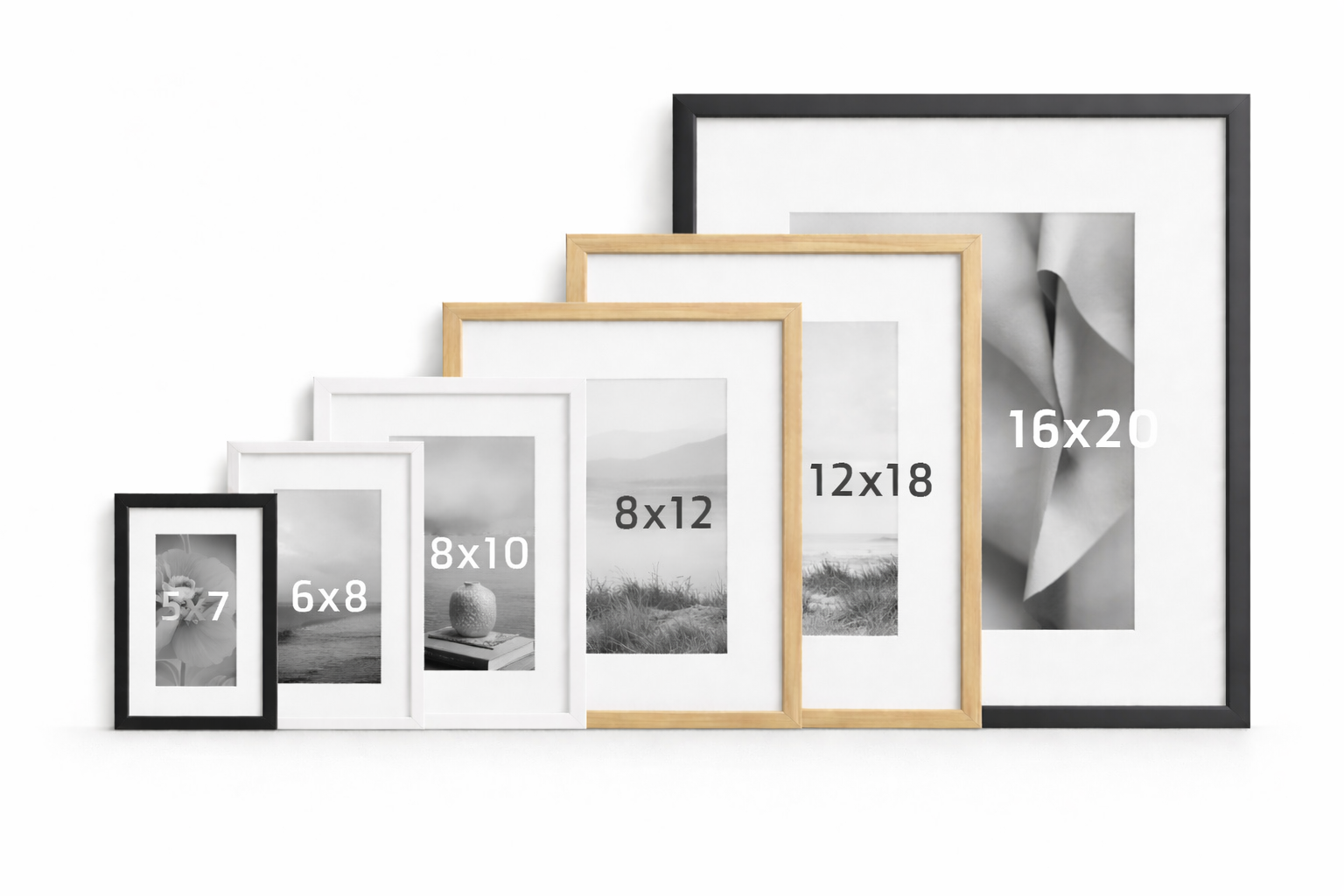
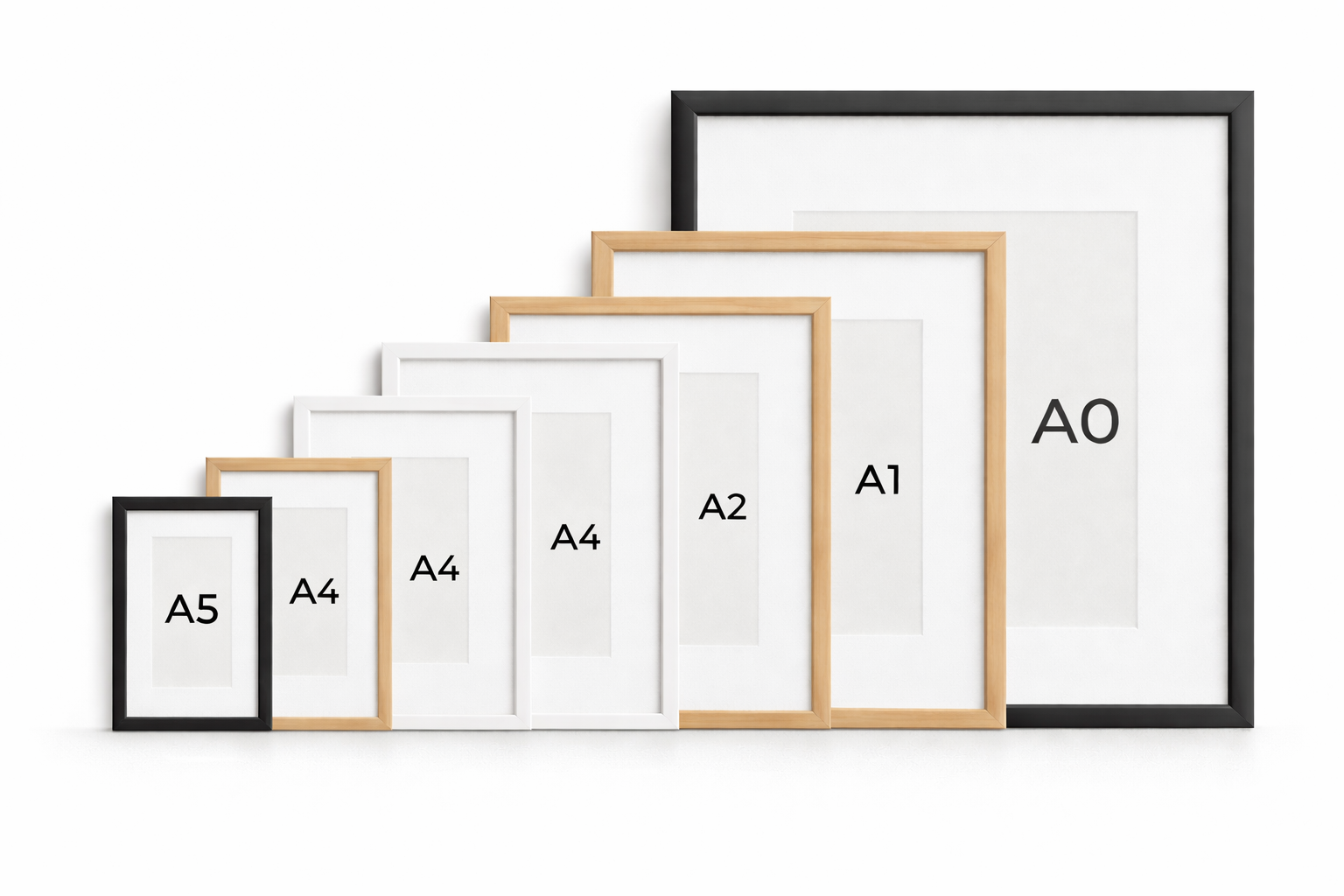
• Size — matching the artwork to a standard frame size
• Frame width — wider frames suit larger pieces and provide better support
• Matboard — adds space and helps the artwork stand out (four colour options available)
• Glazing — clear or UV-filtering acrylic provides strong, reliable protection
A simple, well-proportioned frame will almost always look better than something overly complex.
Why Materials Matter
Not all frames are made the same.
We use carefully selected, high-quality materials throughout — solid, well-finished timber frames, durable paint and stain finishes, and acid-free backing boards as standard. Conservation-grade options are available where long-term protection matters most.
Our glazing uses premium-grade acrylic — exceptionally clear, stable, and far more robust than the thin, flexible alternatives often found in lower-cost ready-made frames.
It’s these details that make the difference over time.
Common Sizes & Ready-Made Options
Many types of artwork and prints are produced in standard sizes, making ready-made framing a reliable and efficient choice.
This includes:
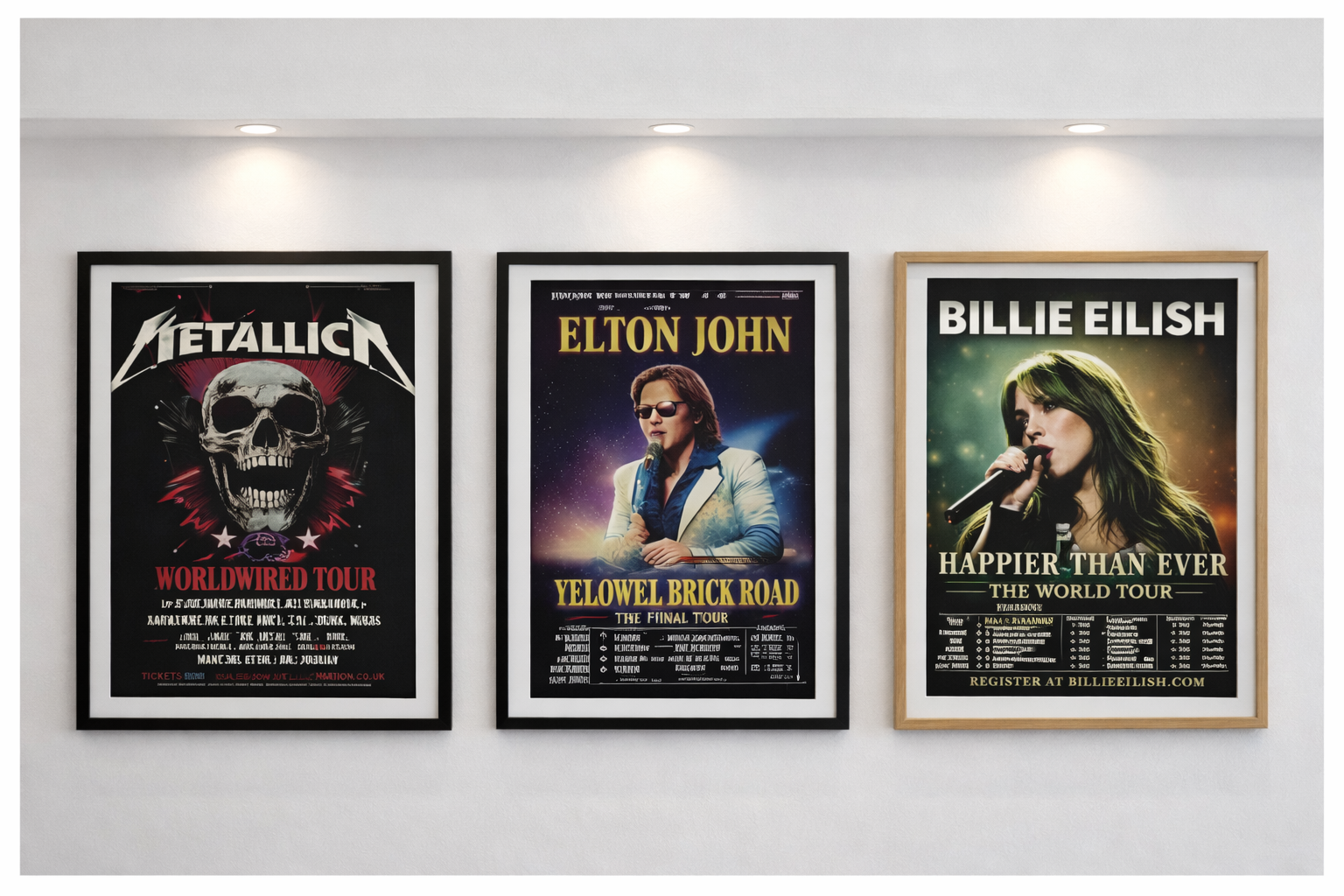
• Movie and music posters
• Art prints and fine art paper
• Photographs
Frames designed specifically for these sizes allow for a cleaner fit and easier setup, without the need for full custom framing.
If you’re working within standard dimensions, ready-made frames offer a strong balance between simplicity, cost, and presentation.
How to Frame Different Types of Artwork
Framing a Poster or Art Print
Posters and prints benefit from a frame that keeps them flat and protected. Adding a matboard can lift the presentation, giving the image space before the frame edge and helping it sit more comfortably on the wall.
Framing a Photograph
Photographs are best protected behind glazing to prevent dust and surface damage. A matboard is often used to keep the photo from sitting directly against the acrylic, reducing the risk of long-term sticking or marking.
Framing Fine Art Paper
Fine art paper benefits from careful handling and proper support. Using acid-free materials and allowing appropriate spacing helps maintain the integrity of the artwork over time.
Common Framing Mistakes
Framing is relatively straightforward, but a few common issues can affect the final result:
• Choosing a frame that’s too narrow for the size
• Using basic materials where conservation options are more appropriate
• Letting artwork sit directly against glazing without spacing
• Using low-quality materials that can warp or degrade over time
Paying attention to these details makes a noticeable difference in both appearance and longevity.
When Ready-Made Framing Works — And When It Doesn’t
Ready-made frames are designed for consistency. When the artwork fits within standard sizes and doesn’t require specific design considerations, they provide a straightforward and reliable solution.
They work well for:
• Standard-sized posters and prints
• Everyday photographs
• Decorative artwork where simplicity is preferred
However, not all artwork suits a ready-made frame.
Custom framing becomes the better option when the artwork deserves more than a standard fit:
• The size falls outside standard formats
• The artwork requires careful visual balance or design input
• The piece carries sentimental, cultural, historical, or monetary value
• Long-term preservation is a priority
In these situations, framing becomes less about convenience and more about making the right decisions for the artwork itself.
Ready-Made vs Custom Framing
There are generally two approaches:
Ready-Made Framing
• Designed for standard sizes
• Simple to assemble
• Cost-effective and reliable
Custom Framing
• Fully tailored sizing and design
• Designed to complement and enhance the artwork
• Better suited for valuable or meaningful pieces
• Ideal for non-standard sizes or more complex presentation
• Greater control over materials, spacing, and overall finish
For standard artwork, ready-made framing can be a strong and practical option. Custom framing becomes more relevant when size, value, or design requirements go beyond standard solutions.
A Simple, Practical Approach
Framing doesn’t need to be overcomplicated.
With the right combination of size, support, and materials, standard-sized artwork, photos, and posters can be framed cleanly and effectively using well-made ready-made frames.
The focus is always the same — keep it stable, keep it protected, and let the artwork speak for itself.
Need a Frame for Your Artwork?
If you’re working with standard sizes, you can explore our range of ready-made frames designed for artwork, photos, and posters.
If your artwork needs something more considered, you can explore our custom framing options or get in touch — we’re always happy to point you in the right direction.